
Understanding Core Integrity: More Than Abs, Less Than Surgery

The term “core” is often reduced to aesthetics. Flat abs, visible lines, and a tight midsection dominate conversations around abdominal health. Yet for many patients, the issue is not a lack of definition—it is a lack of integrity. Core integrity refers to how well the abdominal wall functions as a supportive system, not just how it looks.
After weight gain, pregnancy, aging, or prolonged inactivity, the core often loses its ability to stabilize the spine, support posture, and maintain tension. Fat loss alone does not correct this. In some cases, it even exposes the problem further. Understanding the difference between appearance and integrity is essential for restoring both function and form.
What the Core Actually Is—and Why It Matters
The core is not a single muscle group. It is a coordinated system that includes deep stabilizing muscles, the abdominal wall, the pelvic floor, and the muscles supporting the spine and hips. Together, these structures manage pressure, maintain balance, and protect the lower back during movement.

When this system is functioning well, posture feels natural. Movement is efficient. The abdomen appears flat not because it is rigid, but because it is active and supported. When the system fails, the body compensates. Posture shifts forward. The lower back carries more load. The abdomen may protrude or feel weak even in individuals who are otherwise lean.
Core integrity is therefore foundational. It influences how the body moves, how it holds itself, and how it ages.
How Weight Changes Compromise Core Integrity
Weight gain stretches the abdominal wall over time. As the abdomen expands, muscles lengthen and lose tension. Neuromuscular signaling diminishes, particularly in the deeper layers responsible for stabilization. The body adapts by relying on surface muscles or shifting load to the lower back and hips.

When weight is later lost—especially rapidly—the stretched muscles do not automatically regain their tone or coordination. The volume may be gone, but the structure remains compromised. Patients often describe this as a “soft” or “unsupported” feeling through the midsection, even after significant fat loss.
This is why many individuals who lose weight still struggle with posture, lower back discomfort, and lack of abdominal control.
Pregnancy and the Core: A Lasting Impact
Pregnancy places unique demands on the core. As the uterus expands, the abdominal wall must stretch to accommodate growth. Deep stabilizing muscles are displaced, and neuromuscular coordination shifts to protect the body during this period.

After pregnancy, the abdominal wall does not simply snap back. Muscle fibers may remain elongated and underactive. The connection between the nervous system and the core can remain disrupted, especially if rehabilitation is limited or inconsistent.
Even years later, patients may experience poor core engagement, abdominal protrusion, or reduced stability. These changes are functional, not cosmetic, and they require targeted intervention.
Why Traditional Exercise Often Falls Short
Exercise is commonly prescribed to strengthen the core, yet many patients find it frustrating or ineffective. This is not because exercise is inherently flawed, but because the muscles involved are often poorly activated.

If deep stabilizers cannot be recruited voluntarily, exercises tend to reinforce compensations rather than restore integrity. Surface muscles may dominate movement while deeper layers remain dormant. Over time, this can worsen imbalances rather than correct them.
Additionally, patients recovering from weight loss or pregnancy may lack the stamina or coordination required for high-quality core training. Without proper activation, effort does not translate into improvement.
Why Surgery Is Not Always the Answer
In cases of severe structural damage, surgical intervention may be necessary. However, many patients with compromised core integrity do not require surgery—they require reactivation.

Surgery addresses anatomy. Core integrity depends on neuromuscular function. Tightening tissue without restoring muscle communication may improve appearance temporarily, but it does not rebuild the system responsible for stability and movement.
For patients seeking functional improvement without invasive intervention, non-surgical solutions are essential.
How MNML Tone Rebuilds Core Integrity
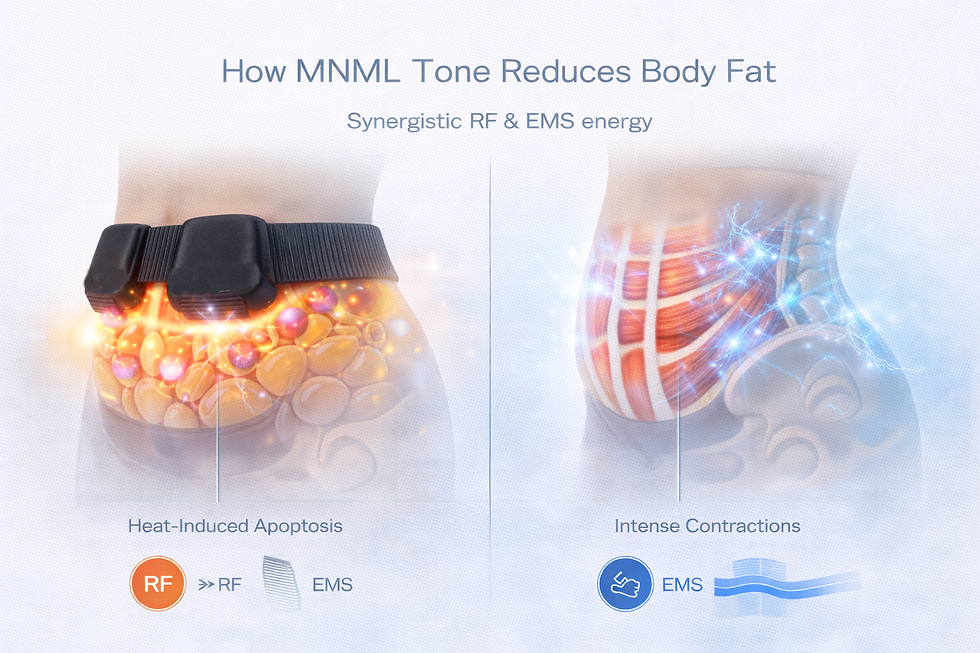
MNML Tone addresses core integrity by focusing on neuromuscular re-education rather than surface appearance. Through high-frequency electrical muscle stimulation, the system activates deep abdominal muscles that are often difficult to engage voluntarily.

These involuntary contractions restore communication between the nervous system and the abdominal wall. Over repeated sessions, muscle fibers become more responsive, coordinated, and capable of sustaining tension.
Integrated radiofrequency energy improves tissue quality by supporting collagen remodeling and increasing circulation. This creates a more supportive environment for muscle activation and adaptation.
Rather than isolating the core visually, MNML Tone rebuilds it functionally.
The Difference Between Abs and Integrity
Visible abs are a byproduct of low fat and strong surface muscles. Core integrity is the ability to maintain pressure, stability, and alignment under load.

Patients with restored core integrity often notice improvements before they see dramatic visual changes.
Posture improves. Movement feels easier. Lower back strain decreases. Over time, these functional improvements translate into a flatter, firmer abdominal appearance.
The body looks better because it works better.
Long-Term Benefits of Restoring Core Function
When the core functions properly, it supports the entire body. Improved stability reduces strain on the spine and hips. Balance improves. Movement patterns become more efficient.
From an aesthetic standpoint, a functioning core provides natural lift and tension beneath the skin. The abdomen appears more defined without aggressive fat reduction or invasive procedures.
From a metabolic standpoint, active core muscles contribute to overall energy expenditure and help maintain results after weight loss.
Why Core Integrity Supports Confidence and Quality of Life
Patients often underestimate the emotional impact of core weakness. Feeling unsupported through the midsection can affect confidence, movement, and even willingness to engage in physical activity.
As core integrity returns, patients frequently report feeling stronger, more capable, and more connected to their bodies. This shift influences how they carry themselves and how they perceive their results.
Strength restores confidence in ways that appearance alone cannot.
Integrity Comes Before Definition
The core is more than abs. It is the foundation of posture, stability, and movement. When that foundation is compromised, no amount of fat loss or surface tightening can fully restore balance.
Understanding core integrity reframes the conversation around abdominal aesthetics. True improvement comes from rebuilding function, not chasing lines.
MNML Tone provides a non-invasive pathway to restore core integrity by reactivating deep muscles and supporting tissue health. By addressing the root cause of weakness, it allows strength, stability, and appearance to improve together.
Core integrity is not about perfection—it is about support. And when the core is supported, the entire body benefits.


Comments