
What Happens to Fat Cells After RF Treatment? A Timeline of Change

Radiofrequency (RF) treatments are often discussed in terms of results—smoother skin, reduced inches, improved contour—but far less attention is given to what actually happens inside the body after a session ends. Many patients expect immediate, dramatic change and are confused when results appear gradually.
Others assume RF “melts” fat instantly, only to be disappointed when the mirror does not reflect overnight transformation.
In reality, RF works through a biological process, not a cosmetic trick. The changes it initiates unfold over time, as fat cells respond to thermal stress and the body’s natural systems take over. Understanding this timeline helps set realistic expectations and clarifies why RF—especially when combined with technologies like EMS—produces results that continue to improve weeks after treatment.
How RF Interacts With Fat Tissue
RF energy works by generating controlled heat within the dermis and subcutaneous fat layer. When delivered properly, this heat reaches a temperature range that fat cells are particularly sensitive to, while surrounding tissues remain protected.

Fat cells respond to thermal stress differently than skin or muscle. As RF raises the temperature of the adipose layer, the fat cell membrane becomes more permeable and metabolically active. Internal pressure increases, and cellular processes that normally remain dormant begin to activate.
This heating does not destroy fat cells mechanically. Instead, it initiates a cascade of biological signals that mark the beginning of a gradual reduction process.
Immediately After Treatment: Metabolic Activation Begins
In the hours following an RF session, fat cells are still very much present. What has changed is their internal environment. Heat exposure increases cellular stress, disrupts lipid storage stability, and signals the body that these cells are no longer functioning optimally.

At the same time, circulation in the treated area increases. Blood flow improves, oxygen delivery rises, and lymphatic movement accelerates. These changes are subtle but important, as they prepare the tissue for the next phase of transformation.
Patients may notice warmth, mild redness, or a temporary feeling of firmness during this stage, but visible fat reduction is not yet apparent.
The First One to Two Weeks: Cellular Stress and Signaling
As days pass, thermally stressed fat cells begin entering a programmed response. Rather than rupturing or disappearing immediately, they move toward a controlled breakdown process.

During this phase, fat cells shrink slightly as stored lipids are released. These free fatty acids are processed through normal metabolic pathways and gradually cleared from the area. The surrounding tissue continues to benefit from increased circulation and improved nutrient exchange.
Importantly, this process is selective and gradual, which is why RF does not create irregularities or sudden volume loss. The body is doing the work at its own pace.
Patients may begin to notice subtle changes—clothing fits differently, treated areas feel smoother, or the contour appears slightly refined—but the most visible results are still ahead.
Weeks Two to Six: Apoptosis and Clearance
The most significant changes typically occur during this window. Fat cells that were sufficiently stressed by RF begin a process of programmed cell death, known as apoptosis. Unlike traumatic fat destruction, apoptosis allows the body to safely dismantle and remove cells over time.

As these cells are cleared through the lymphatic system, fat volume in the treated area gradually decreases. Because this process is controlled, surrounding tissues adapt without shock. Skin begins to retract more naturally, and surface irregularities soften.
This is often when patients report measurable changes in circumference and more noticeable contour refinement. Importantly, results during this phase are not fleeting—they reflect real structural change.
Why Results Continue to Improve Over Time
RF’s effects extend beyond fat cells. While adipocyte reduction is occurring, RF-induced heat also stimulates collagen remodeling within the dermis. Collagen fibers contract initially, then reorganize and strengthen over time.
This dual process—fat reduction beneath the skin and tightening within the skin—creates a synergistic effect. As volume decreases, skin quality improves, helping the treated area look firmer rather than deflated.
Because collagen remodeling is a slow biological process, improvements in skin texture and firmness may continue for several months after the final treatment.
Why RF Results Are Not Instant—and Why That’s a Good Thing
Instant fat loss might sound appealing, but abrupt volume reduction often leads to laxity, uneven contours, or unnatural results. RF’s gradual timeline allows the body to adapt safely.

By relying on natural metabolic and lymphatic pathways, RF respects tissue integrity. This is why results appear progressive rather than dramatic overnight. The body reshapes itself, rather than being forced into change.
Understanding this timeline helps patients appreciate RF as a process, not a single event.
How MNML Tone Enhances the RF Fat-Reduction Timeline
MNML Tone is designed to support and accelerate this natural progression. While RF initiates fat cell stress and apoptosis, MNML Tone’s integrated electrical muscle stimulation adds another layer of benefit.
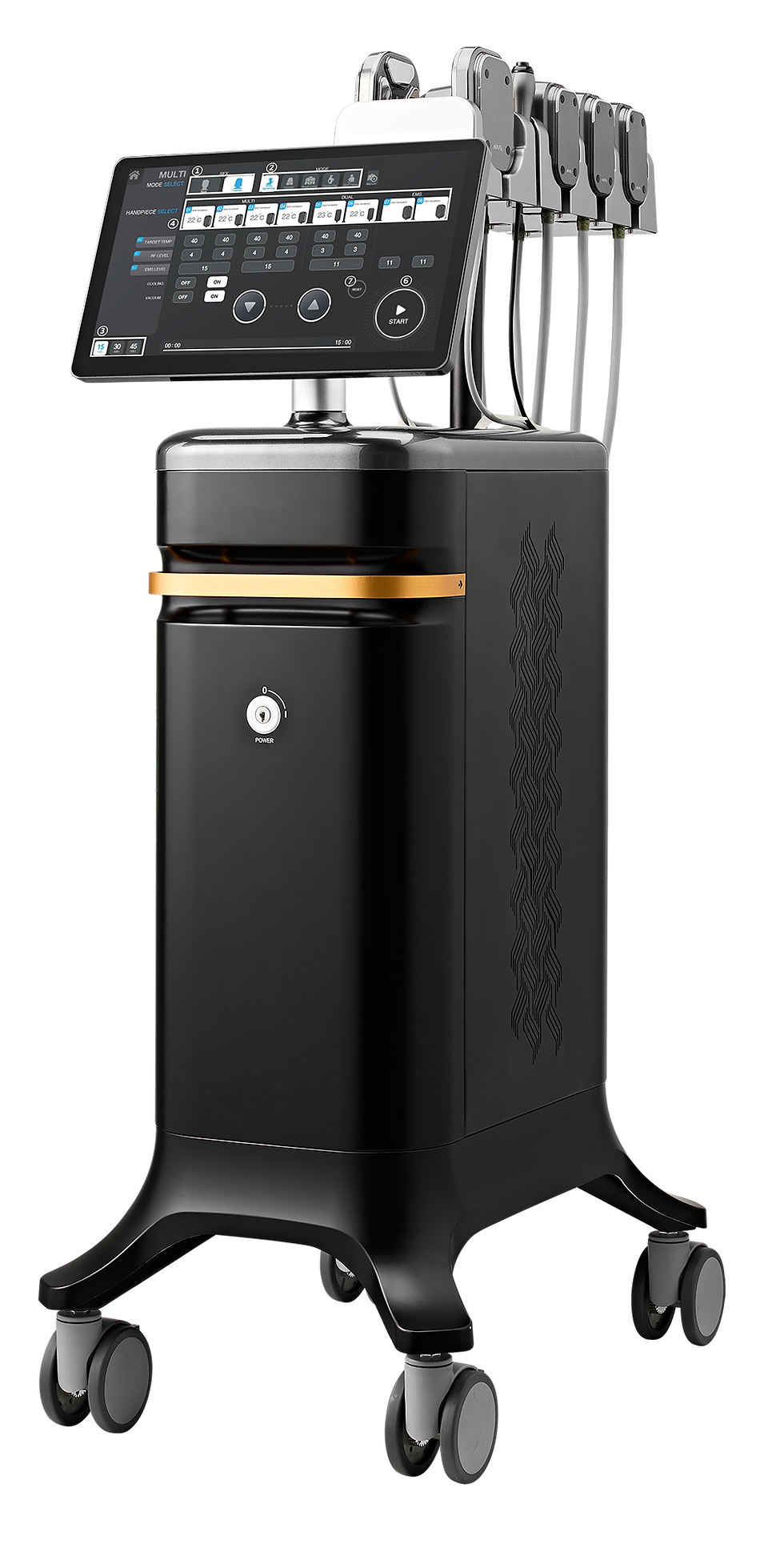
As EMS activates deep muscle contractions, local metabolic demand increases. Muscles require energy, and nearby fat stores become a readily available fuel source. This heightened demand helps mobilize released fatty acids more efficiently.
Additionally, muscle contractions improve circulation and lymphatic flow, supporting faster clearance of broken-down fat cells. The result is not only more effective fat reduction, but also improved muscle tone beneath the surface.
MNML Tone’s vacuum technology further enhances this process by improving tissue contact, circulation, and lymphatic drainage, while integrated cooling allows RF energy to be delivered safely and consistently.
Why Combining RF With Muscle Activation Changes Outcomes
When RF is used alone, fat reduction occurs—but muscle beneath the fat may remain underutilized. In patients who have experienced muscle loss due to aging or weight reduction, this can lead to softness even after fat volume decreases.
By combining RF with EMS, MNML Tone addresses both sides of the equation. Fat cells are reduced gradually, while muscle is rebuilt and reactivated. This restores structure and creates more visible definition as volume decreases.
The outcome is not just less fat, but a more sculpted, supported contour.
What Patients Commonly Notice at Each Stage

While individual experiences vary, many patients describe a similar progression. Early on, treated areas may feel firmer or warmer. Within a few weeks, subtle reductions in circumference become noticeable.
Over time, the area appears smoother, tighter, and more defined.
These changes often continue even after treatments conclude, reinforcing the importance of patience and proper scheduling.
Setting Expectations for Lasting Results
RF does not promise instant gratification, but it does offer durable change. Because fat cells are reduced through natural biological processes, results are long-lasting when supported by healthy habits and muscle maintenance.
MNML Tone enhances this durability by rebuilding muscle and improving tissue quality alongside fat reduction. This layered approach supports both immediate refinement and long-term stability.
RF Is a Process, Not a Moment
Understanding what happens to fat cells after RF treatment reframes expectations. RF does not erase fat overnight—it initiates a carefully orchestrated biological process that unfolds over weeks.
By stressing fat cells, supporting metabolic clearance, and stimulating collagen remodeling, RF creates gradual, natural-looking change. When paired with muscle activation and circulation support, as in MNML Tone, this process becomes more efficient and more complete.
True contouring is not about speed—it is about synergy, patience, and respect for how the body actually transforms.



Comments