
Breaking the Plateau: Why Some Bodies Stop Responding to Diet and Exercise Alone

.
Few experiences are more frustrating than doing everything “right” and seeing nothing change. Calories are tracked. Workouts are consistent. Healthy habits are in place. Yet the scale stalls, measurements refuse to budge, and the body looks the same week after week. For many patients, this moment marks the beginning of a weight-loss or body-contouring plateau—one that feels confusing, discouraging, and deeply personal.
The reality is that plateaus are not a sign of failure. They are a biological response. When the body stops responding to diet and exercise, it is not resisting progress out of stubbornness. It is adapting in an effort to preserve energy and maintain balance. Understanding this adaptation is the first step toward breaking through it.
What a Plateau Really Means
The human body is remarkably efficient. When calories are reduced or physical activity increases, the body responds at first by releasing stored energy. Fat loss occurs, water weight shifts, and muscle tone may improve. Over time, however, the body begins to adjust.
This adjustment—known as metabolic adaptation—occurs when the body lowers its energy expenditure to match the new intake. Resting metabolic rate declines. Hormonal signals shift. Muscles become less metabolically demanding, particularly if they are not being challenged with sufficient resistance or intensity. What once produced visible results now maintains the status quo.
At this stage, progress stalls not because effort has stopped, but because the body has become more efficient at conserving energy.
Why Diet Alone Stops Working

Calorie reduction is a powerful tool, but it has limitations. When food intake drops significantly, the body prioritizes survival. It seeks to conserve energy wherever possible. One of the first systems to downregulate is muscle.
Muscle tissue requires energy to maintain. In a low-calorie environment, especially one low in protein, the body begins breaking down muscle to meet its needs. As muscle mass declines, so does metabolic demand. The very tissue that helps burn calories at rest is reduced, making further fat loss increasingly difficult.
This creates a paradox: eating less eventually leads to burning less. The scale may stop moving, and the body may appear softer despite continued restriction.
Why Exercise Alone Eventually Loses Its Impact
Exercise is often prescribed as the solution to stalled progress, yet many patients find that increasing workouts yields diminishing returns. This is particularly true when exercise routines rely heavily on cardiovascular activity or repetitive movements.
Over time, the nervous system adapts to familiar patterns. Muscles recruit fewer fibers to perform the same tasks. Intensity declines, even if duration increases. Without progressive overload or deep muscle engagement, workouts become maintenance rather than transformation.
Fatigue further complicates the picture. Patients who are under-eating or experiencing hormonal shifts may lack the energy required for high-intensity resistance training. As a result, workouts become less effective at stimulating muscle growth or increasing metabolic demand.
The body becomes efficient at doing more with less—and efficiency is the enemy of change.
The Missing Variable: Neuromuscular Activation
Most plateaus share a common underlying issue: insufficient neuromuscular stimulation. When muscles are not challenged deeply enough, they do not adapt. When they do not adapt, metabolic demand remains low.

Neuromuscular activation refers to the communication between the nervous system and muscle fibers. High-quality activation recruits a broad range of fibers, including those responsible for strength, tone, and hypertrophy. Without this recruitment, muscles remain underutilized.
Traditional exercise does not always reach these fibers, especially in individuals who are fatigued, deconditioned, or metabolically adapted. This is where technology becomes essential.
How Electrical Muscle Stimulation Changes the Equation
Electrical muscle stimulation works differently than voluntary movement. Rather than relying on conscious effort, EMS directly activates motor neurons, triggering involuntary muscle contractions. These contractions can be stronger and more comprehensive than those achieved through exercise alone.

By bypassing the nervous system’s protective limitations, EMS recruits deep muscle fibers that are often difficult to engage voluntarily. This increases muscle workload without requiring additional energy expenditure from the patient. The muscles contract, demand fuel, and adapt accordingly.
When muscle activity increases, metabolic demand rises. Fat becomes a more readily utilized energy source. The body shifts out of conservation mode and back into change.
Why RF Matters in Plateau-Breaking
While EMS addresses muscle activation, radiofrequency energy addresses the tissue environment surrounding the muscle. RF gently heats the dermis and subcutaneous layers, increasing circulation and improving tissue conductivity.
This heating effect enhances the efficiency of muscle contractions by reducing resistance within the tissue. It also stimulates collagen remodeling and supports fat metabolism. Together, these changes create a more responsive biological environment.
When RF and EMS are combined, the plateau is challenged on multiple levels. Muscle demand increases. Fat becomes more metabolically active. Circulation improves. The body receives a clear signal that adaptation is no longer sufficient.
How MNML Tone Re-Activates Stalled Systems
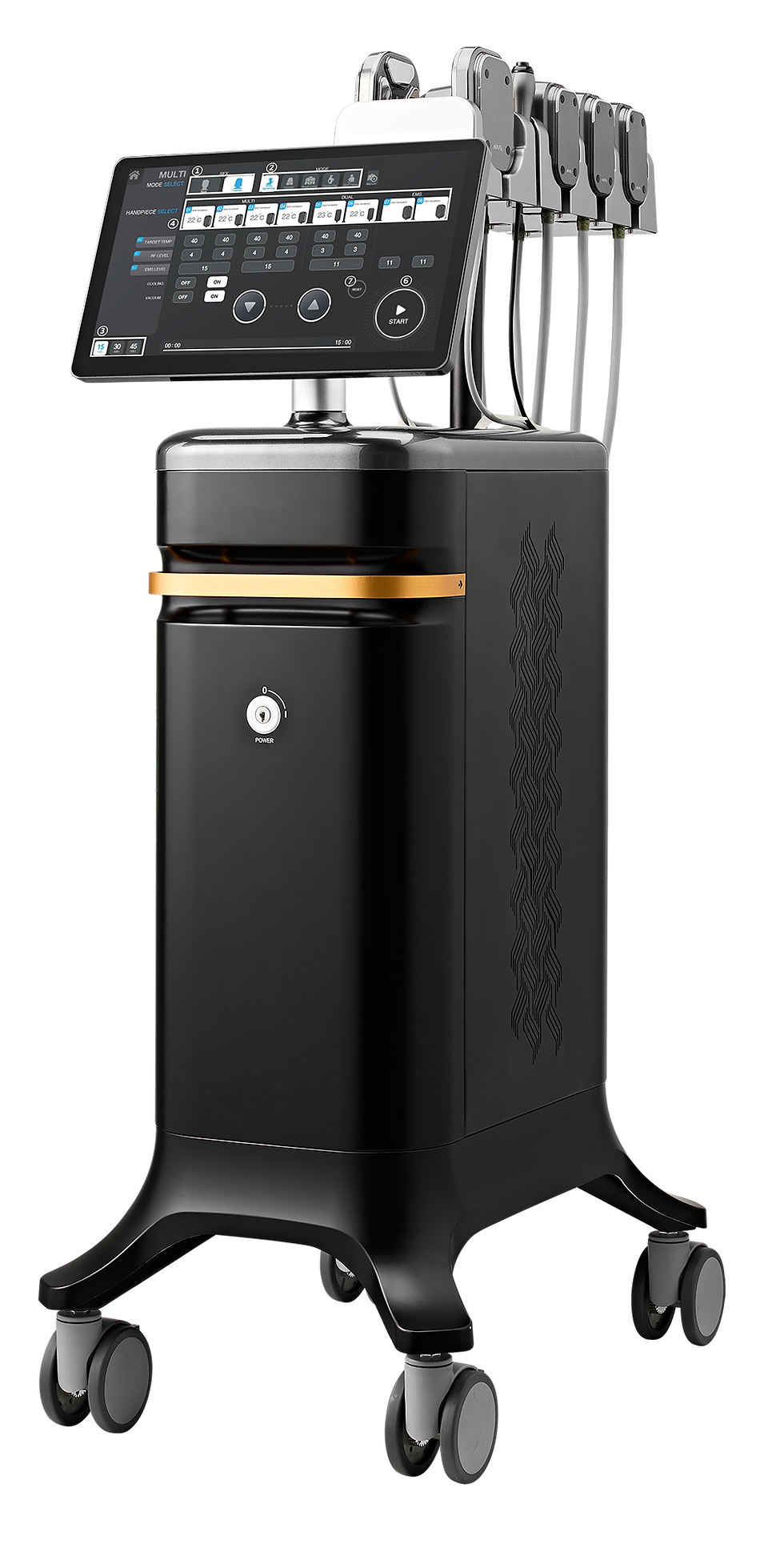
MNML Tone was designed to address plateaus not by asking patients to do more, but by changing how their bodies respond. By delivering synchronized RF and high-frequency EMS, the system stimulates deep muscle contractions while simultaneously improving tissue conditions.
As muscles contract involuntarily, they rebuild strength and demand energy. RF supports this process by improving circulation and tissue pliability. Over time, this combination helps restore metabolic momentum and structural integrity.
Patients often notice that areas resistant to change begin responding again. The abdomen becomes firmer. The glutes regain lift. Arms and thighs show renewed tone. Progress resumes—not because effort increased, but because biology was re-engaged.
Why Plateaus Are Especially Common After Weight Loss
Rapid or significant weight loss often precedes a plateau. As weight decreases, muscle mass frequently declines alongside fat. This reduction in lean tissue lowers resting metabolic rate, making further change difficult.
Additionally, hormonal shifts associated with weight loss can suppress energy levels and reduce exercise tolerance. Patients may feel physically incapable of pushing harder, even though they remain motivated.
MNML Tone addresses these challenges by rebuilding muscle without requiring additional physical exertion. It allows patients to restore strength and metabolic demand while preserving energy—a critical advantage during periods of adaptation.
Beyond Aesthetics: Functional Improvements Matter
Breaking a plateau is not only about appearance. As muscle strength improves, posture often improves as well. Core stability enhances balance and reduces strain on the lower back. Daily movement becomes easier, and patients feel more capable in their bodies.
These functional improvements reinforce aesthetic changes. A body that moves better tends to look better. Strength and confidence increase together, creating momentum that extends beyond the treatment room.
Plateaus Are Signals, Not Failures
When the body stops responding to diet and exercise, it is communicating a need for a different approach. Plateaus signal that the current strategy has reached its biological limit.
Breaking through requires more than discipline. It requires deeper stimulation, structural rebuilding, and metabolic reactivation. Technologies that address muscle, tissue, and circulation simultaneously offer a path forward when traditional methods fall short.
MNML Tone does not replace diet or exercise—it enhances their effectiveness by reawakening the systems that drive change. By addressing the root causes of adaptation, it helps the body move past resistance and into renewal.
Progress does not stop because effort disappears. It stops because the body adapts. And adaptation can be overcome when biology is properly engaged.



Comments